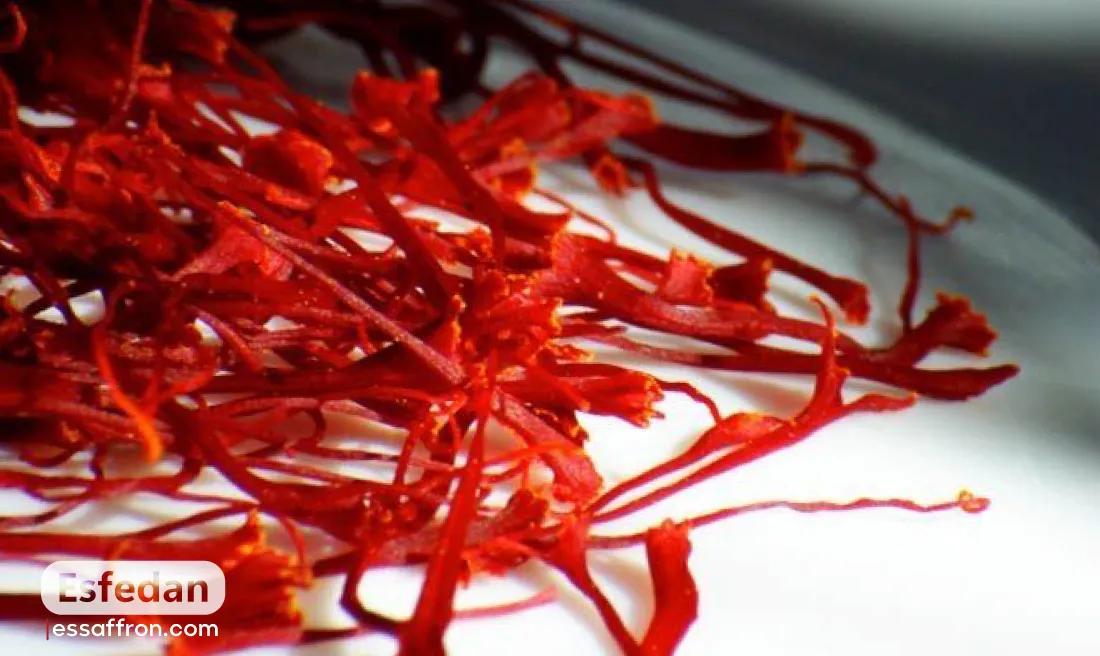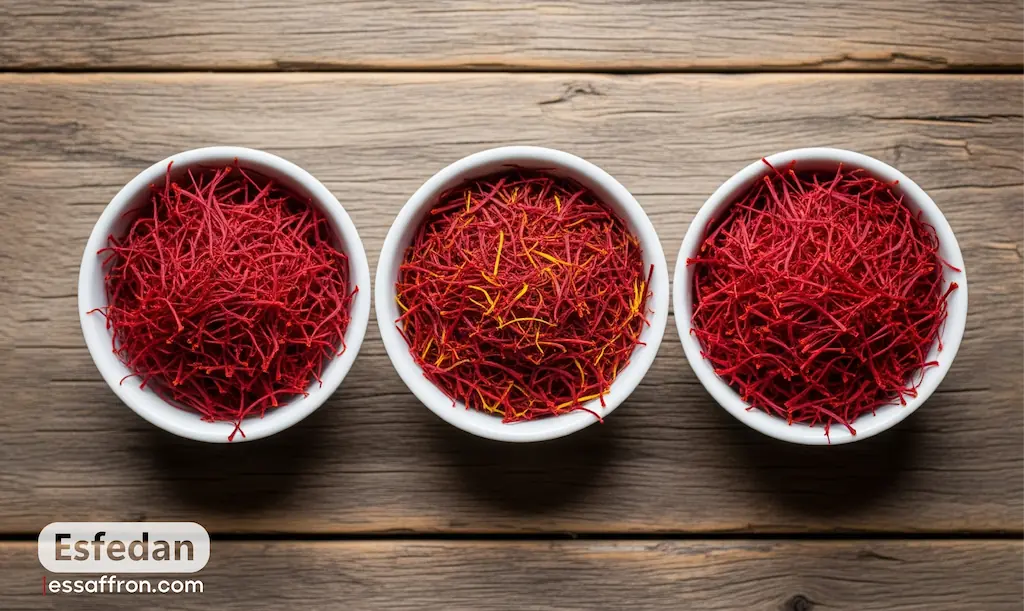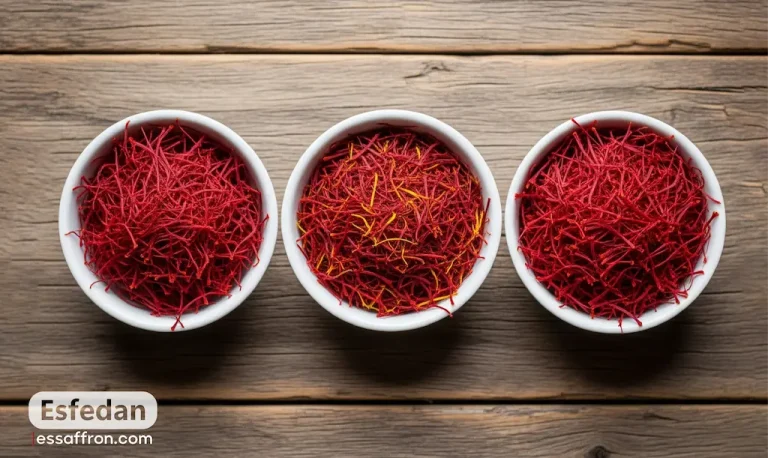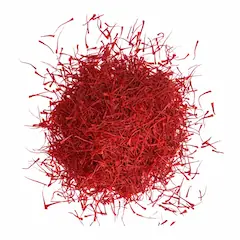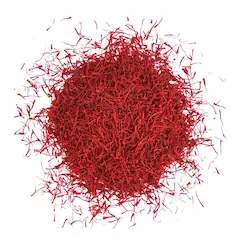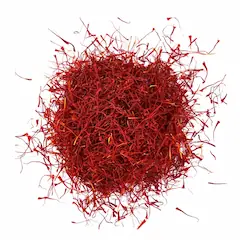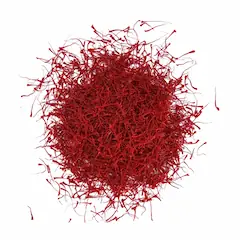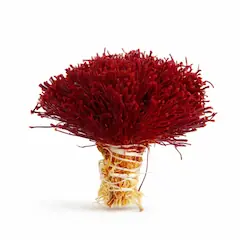
Negin saffron is an all-red Iranian saffron type recognized for its long, substantial stigmas and clean filament structure. The yellow and white style is removed, while the red sections are retained in relatively long and intact form.
Its identity lies between two familiar visual profiles. Compared with Sargol, Negin usually has longer and more complete threads. Compared with Super Negin, its appearance can be slightly less uniform or open, without losing the characteristics that make long all-red saffron desirable.
This balance between thread appearance and strong analytical performance makes Negin a distinct category with its own range of products rather than simply a secondary version of Super Negin.

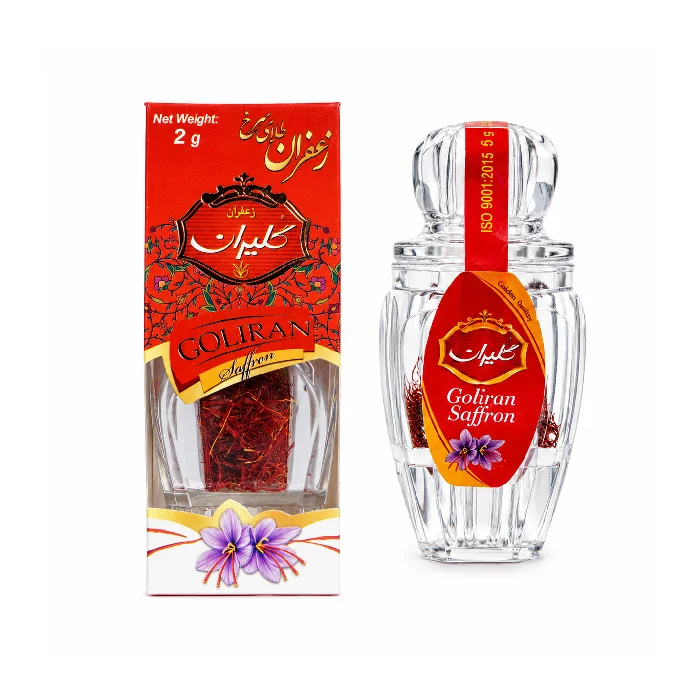
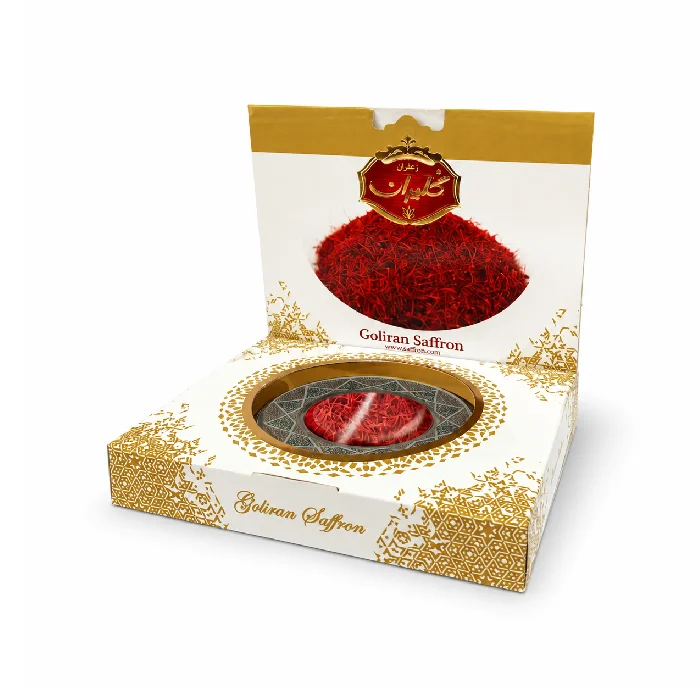
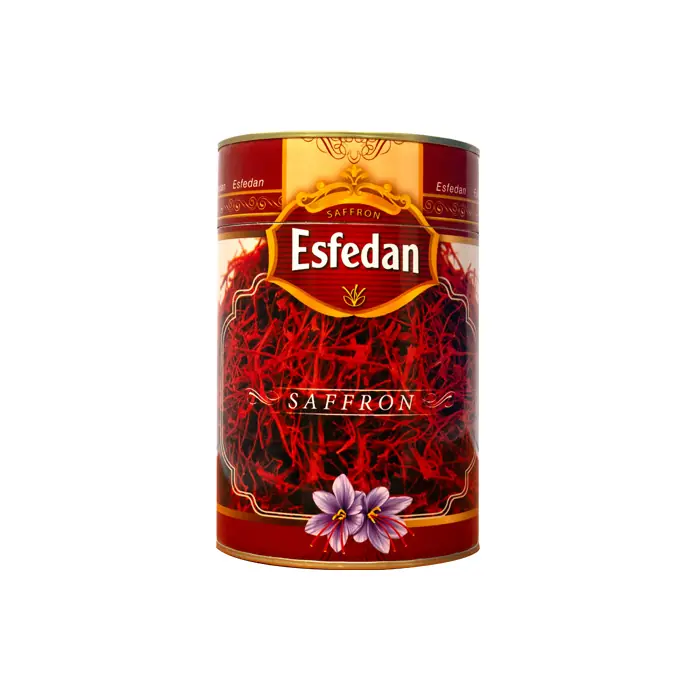
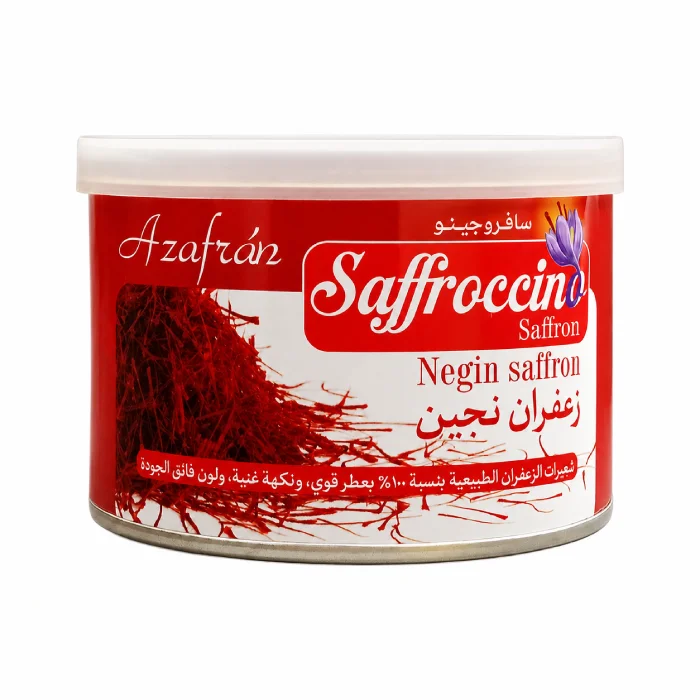
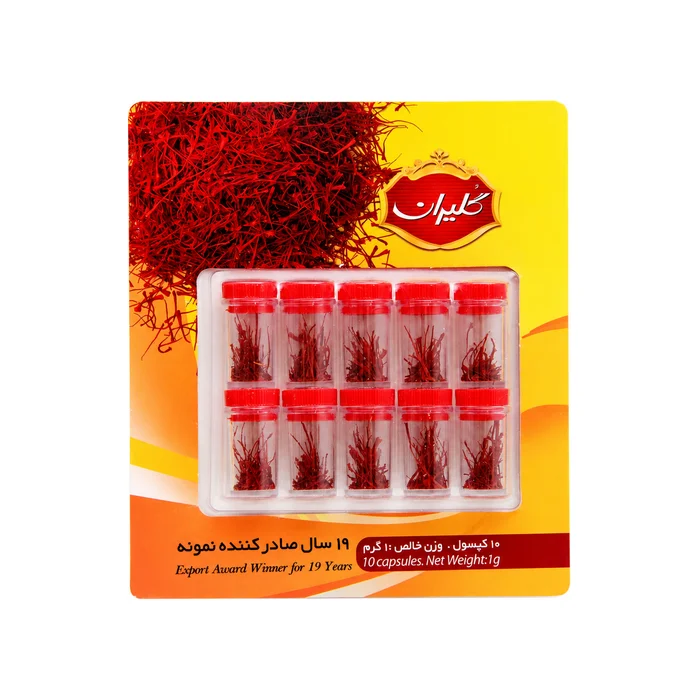
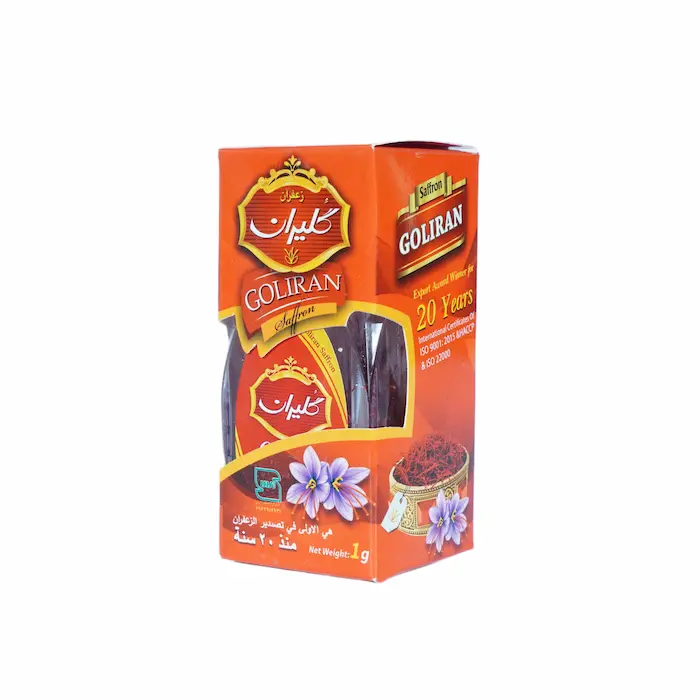
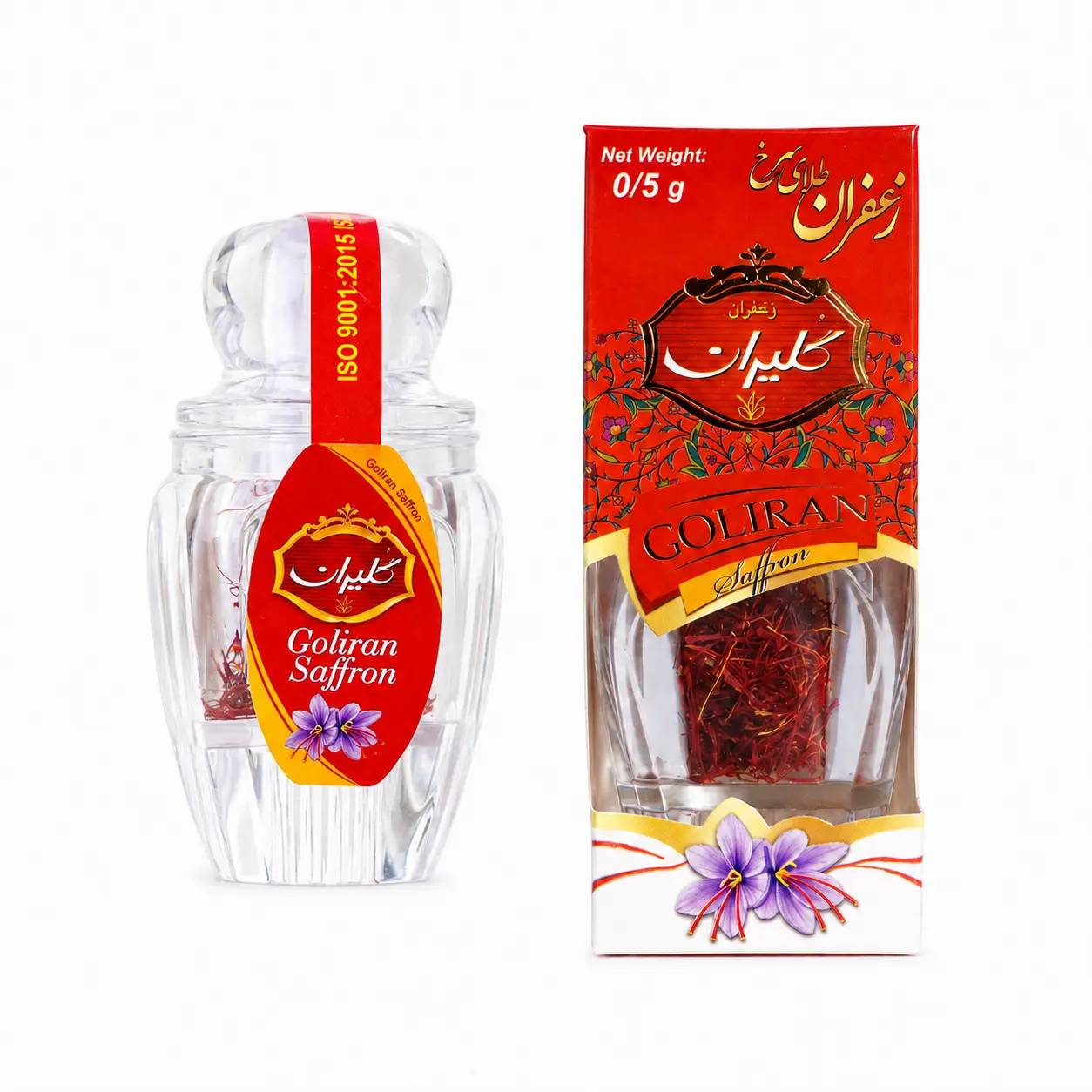
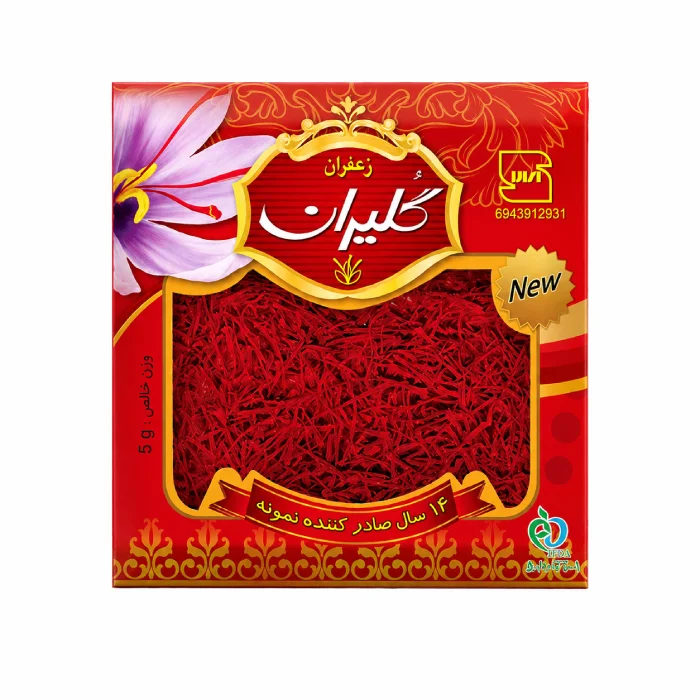
To classify saffron as Negin, looking only at its red color is not enough. Sargol and Super Negin are also all-red types.
Negin is better identified through a combination of characteristics:
Unlike shorter or more fragmented saffron threads, Negin is characterized by elongated, all-red stigmas that retain a relatively intact and well-developed structure.
Products within the same Negin category do not necessarily look completely identical.
Saffron is an agricultural product, so natural variation can occur between harvests and batches. Thread length, thickness, curvature, shade of red, and the proportion of intact filaments can vary while the saffron still retains the defining characteristics of Negin.
This is also why a category page should not describe every Negin product using one fixed laboratory number.
For example, one Esfedan Negin analysis records Crocin at 240–275, Safranal at 28–50, Picrocrocin at 85–100, and moisture at 7.28%.
A separate Negin batch records Crocin at 268, Safranal at 39, Picrocrocin at 89, and moisture at 7.08%.
These results are consistent with the same saffron category while demonstrating why batch-specific information can be more useful than assuming every pack has exactly the same analytical value.
Long threads are an important part of Negin’s identity, but they do not tell the whole story.
A useful quality assessment combines the physical structure of the stigma with measurable characteristics.
Coloring performance is principally assessed through Crocin. Higher values indicate stronger color potential under the test conditions.
Aroma is evaluated using Safranal, one of the main compounds associated with saffron’s characteristic fragrance.
Flavor is related to Picrocrocin, which contributes to the distinctive taste and bitterness of saffron.
Other parameters—including moisture, foreign matter, artificial colorants, ash, and microbiological count—help provide a broader picture of purity and product condition.
The following table presents the technical profile recorded for a representative Esfedan Negin analysis. It is useful as a reference for understanding the performance expected within this category rather than as a claim that every individual package will have identical values.
| Test Parameter | Category III | Category II | Category I | Extra | Negin Result | Test Method |
| Extraneous floral and plant matter, max. % | 5 | 3 | 0.5 | 0.25 | 0.05 | ISO 3632-2:2010 |
| Foreign plant matter, max. % | 1 | 0.5 | 0.1 | 0.1 | 0.04 | ISO 3632-2:2010 |
| Moisture and volatile matter, max. % | 12 | 12 | 12 | 12 | 7.28 | ISO 3632-2:2010 |
| Coloring strength – Crocin at 440 nm | Min. 120 | Min. 170 | Min. 200 | Min. 230 | 240–275 | ISO 3632-2:2010 |
| Flavor strength – Picrocrocin at 257 nm | Min. 40 | Min. 55 | Min. 70 | Min. 80 | 85–100 | ISO 3632-2:2010 |
| Aroma strength – Safranal at 330 nm | 20–50 | 20–50 | 20–50 | 30–50 | 28–50 | ISO 3632-2:2010 |
| Cold-water-soluble extract, max. % | 65 | 65 | 65 | 65 | 58.73 | ISO 3632-2:2010 / ISO 941 |
| Artificial colorants | Negative | Negative | Negative | Negative | Negative | ISO 3632-2:2010 |
| Total ash, max. % | 8 | 8 | 8 | 8 | 4.54 | ISO 3632-2:2010 / ISO 928 |
| Acid-insoluble ash, max. % | 1.5 | 1 | 1 | 1 | 0.31 | ISO 3632-2:2010 / ISO 930 |
| Total microbial count | Max. 3 × 10⁵ CFU/g | — | — | — | 3 × 10 CFU/g | INSO 5272-1 |
| Escherichia coli | Negative | — | — | — | Negative | INSO 2946 |
A second Negin analysis provides a useful additional reference: Crocin 268, Picrocrocin 89, Safranal 39, moisture 7.08%, foreign plant matter 0.03%, and no detected artificial colorants.
Taken together, these results illustrate the difference between defining a category by a rigid single number and assessing the actual quality of individual batches.
One useful way to understand Negin is to compare the physical form of the red stigma rather than treating every saffron type as a simple quality ladder.
| Type | Main Filament Character | Style |
| Super Negin | Very long, thick and highly selected red stigmas | Removed |
| Negin | Long, intact and well-developed red stigmas | Removed |
| Sargol | Shorter all-red stigma sections | Removed |
| Pushal | Red stigma with a short lighter section | Partly retained |
| Bunch | Red stigma with a much larger portion of style | Retained |
Negin therefore offers the clean all-red character expected from premium Iranian saffron without requiring every thread to meet the stricter physical selection associated with Super Negin.
If you want to compare the broader origins of saffron rather than individual thread grades, the Top 10 saffron producing countries guide provides a separate geographical perspective.
Because this is a product category, the most useful question is not simply “Is Negin good?” but “Which Negin product suits the intended use?”
When reviewing the products in this category, consider:
Thread presentation: Products intended for visible presentation may benefit from longer, more intact filaments.
Crocin level: Useful when coloring performance is a priority.
Pack format: Different sizes may suit household use, professional kitchens, retail, or other applications.
Batch information: Laboratory results can help distinguish products that appear visually similar.
Storage requirements: Negin should be kept in a cool, dry environment away from direct light to help protect its sensory characteristics.
The supplied technical information specifies a shelf life of up to 24 months under recommended storage conditions.
Negin’s long threads can be used whole when appearance matters or lightly crushed before infusion when faster extraction is preferred.
A practical preparation method is to gently crush the desired amount, add water at approximately 70–80°C, and leave it to steep for around 15–20 minutes.
The infusion can then be incorporated into:
The same preparation guidance appears in both Negin product references supplied by Esfedan.
Questions about saffron’s biological effects belong to a different search intent from choosing a Negin grade. Readers researching that topic can continue to the Health Benefits of Saffron article.
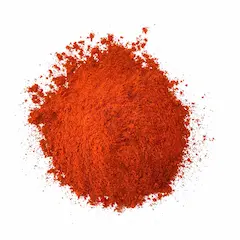
Negin is supplied in its recognizable filament form; applications that require faster dispersion or a different processing format can instead consider saffron powders.
Not necessarily. “Best” depends on what the saffron is expected to do.
Super Negin may be preferred when exceptionally long and highly uniform threads are important. Sargol can be appropriate when the red stigma and strong culinary performance matter more than filament length. Pushal offers a more natural stigma-to-style structure.
Negin is particularly useful when both an attractive all-red thread and strong technical performance are desired.
This context is also important when reading comparisons such as Top 10 best saffron in the world. A universal ranking cannot replace evaluation based on use, grade, laboratory quality, freshness, and physical condition.
The saffron price of Negin can change even within the same category.
Important variables include thread length and integrity, Crocin level, harvest quality, freshness, moisture, batch consistency, packaging, and general market conditions.
This means two Negin products do not need to have identical prices simply because they share the same category name.
For comparison purposes, it is more useful to consider the combination of thread quality and technical performance than to look at price in isolation.
If you want to buy saffron with long, all-red stigmas and the characteristic appearance of the Negin grade, this category brings together Negin products in different formats and pack sizes for easier comparison.
All products in this category retain the defining characteristics of Negin saffron: fully red filaments, no attached yellow style, relatively long stigmas, and strong coloring performance. When comparing the available options, consider thread condition, Crocin level, pack size, and intended use.
Different formats can meet different requirements while remaining within the same Negin category.
Esfedan’s experience with saffron dates back to 1964. For Negin, the focus is on retaining well-developed red stigmas while evaluating each product through both physical characteristics and measurable quality parameters.
Esfedan’s processing system covers flower handling, separation, drying, grading, laboratory quality control, and packaging. Its facilities include specialized saffron-processing areas and cold-storage infrastructure for freshly harvested flowers.
Quality and food-safety systems include ISO 22000, FSSC 22000, HACCP, Halal, Iran National Standard, and the Iranian FDA Health Code. The supporting product materials also reference 21 national awards as an Exemplary and Leading Saffron Exporter.
More information about Esfedan’s sourcing and export capabilities is available on the iranian saffron supplier page. Businesses interested specifically in larger commercial orders can refer separately to the saffron wholesale section.