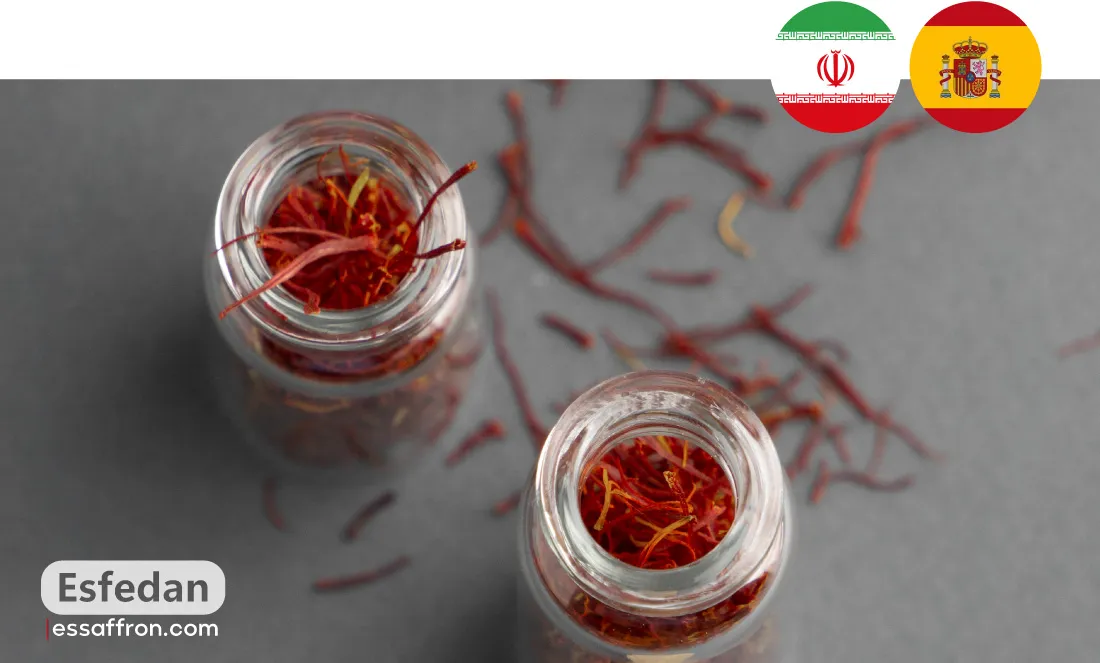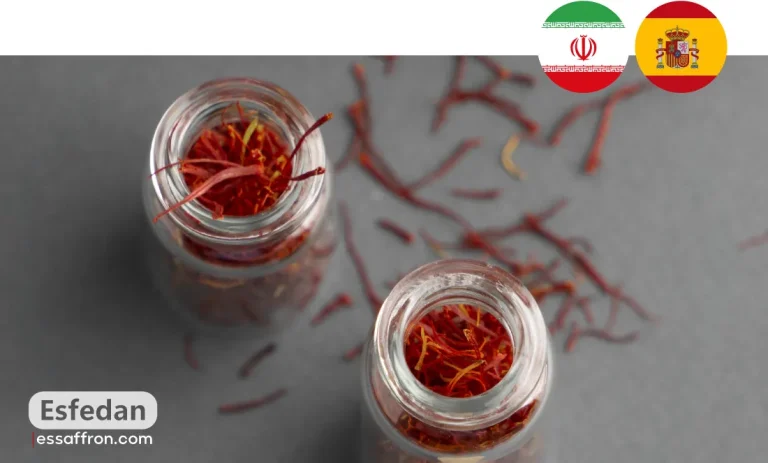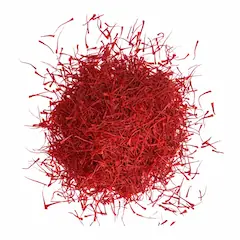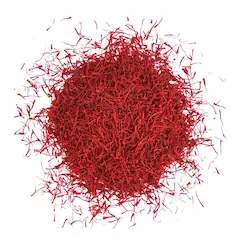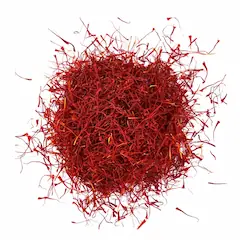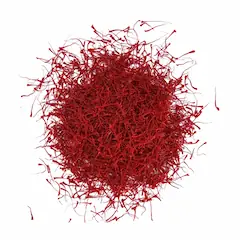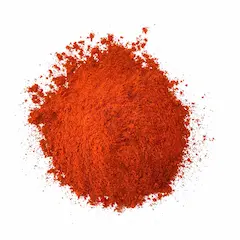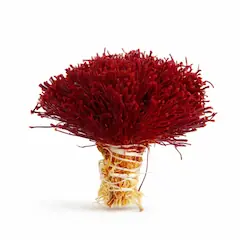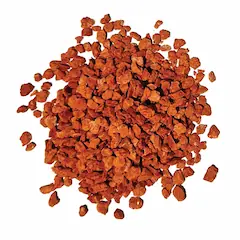
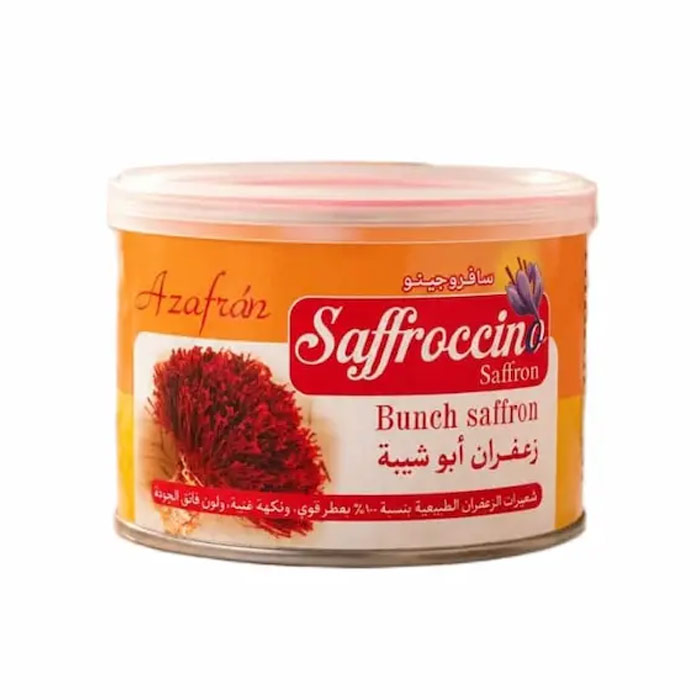
Bunch saffron, traditionally known in Iran as Dokhtar Pich, is distinguished by the amount of the original saffron filament that remains intact after separation. Instead of keeping only the red stigma, Bunch preserves the red section together with a substantial part of the yellow-to-white style.
This gives the threads their characteristic two-tone appearance and makes the natural anatomy of the Crocus sativus L. flower easy to recognize.
Bunch is therefore not intended to resemble Negin, Super Negin, or Sargol. Its value lies in preserving a fuller filament structure while still delivering the characteristic aroma, flavor, and coloring properties of saffron.

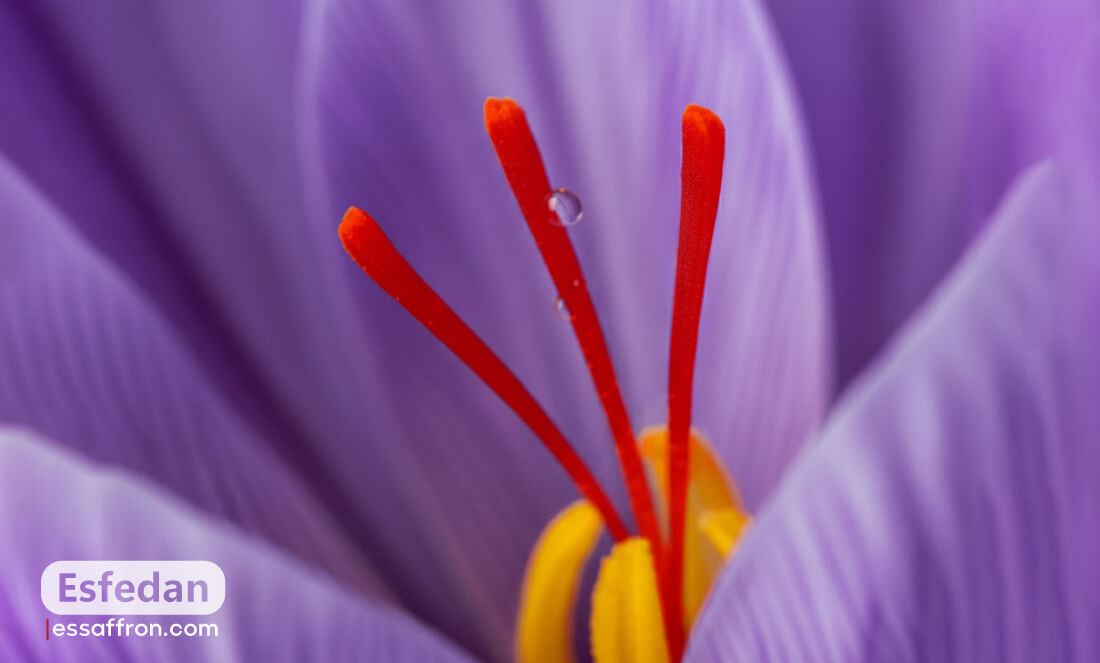
Each saffron flower produces three red stigmas connected to a lighter style. With many saffron types, part or all of this lighter section is removed during grading.
Bunch saffron retains considerably more of it.
A typical filament shows:
Unlike highly trimmed saffron threads, Bunch preserves a larger portion of the natural stigma-and-style connection. The lighter section is part of the saffron flower itself and should not be mistaken for foreign material or poor cleaning.
The Persian name Dokhtar Pich is traditionally associated with the way saffron filaments are kept together in their more complete form.
Unlike all-red grades, where the stigma is separated from the lighter part of the filament, Bunch preserves a visual connection between both sections. This makes it one of the easiest saffron types to identify by structure alone.
For users who want to understand what the saffron thread looks like before extensive trimming, Bunch provides one of the clearest examples.
Bunch should be understood as a saffron family rather than as a single fixed laboratory specification.
The supplied Esfedan technical documents include both a Grade 3 Bunch and a Grade 4 Bunch product. This is important for a category page because different products within the Bunch range can have different coloring strengths and analytical results while retaining the defining stigma-and-style structure.
For example:
| Quality Indicator | Grade 3 Bunch Reference | Grade 4 Bunch Reference |
| Crocin | 120–170 | 150 |
| Safranal | 28–50 | 37 |
| Picrocrocin | 75–100 | 85 |
| Moisture & Volatile Matter | 6.41% | 6.73% |
| Artificial Colorants | Negative | Negative |
| E. coli | Negative | Negative |
This variation is useful when comparing products within the category. The name “Bunch” describes the structure of the saffron, while laboratory values provide more detailed information about the characteristics of a specific grade or batch.
Because Bunch includes more of the style than all-red saffron, its technical profile should be interpreted according to the characteristics of this category rather than compared directly with Super Negin.
The laboratory analysis of the Grade 3 reference reports Crocin of 120–170, Picrocrocin of 75–100, Safranal of 28–50, moisture of 6.41%, cold-water-soluble extract of 56.71%, and no detected artificial colorants.
The Grade 4 reference records Crocin 150, Picrocrocin 85, Safranal 37, moisture 6.73%, cold-water-soluble extract 56.00%, and no detected artificial colorants.
These figures show why appearance alone is not enough to compare Bunch products.
The table below uses the Grade 3 reference as a broader category example because it provides ranges for the principal sensory indicators.
| Test Parameter | Category III | Category II | Category I | Extra | Bunch Reference | Test Method |
| Extraneous floral and plant matter, max. % | 5 | 3 | 0.5 | 0.25 | 12.50 | ISO 3632-2:2010 |
| Foreign plant matter, max. % | 1 | 0.5 | 0.1 | 0.1 | 0.01 | ISO 3632-2:2010 |
| Moisture and volatile matter, max. % | 12 | 12 | 12 | 12 | 6.41 | ISO 3632-2:2010 |
| Coloring strength – Crocin at 440 nm | Min. 120 | Min. 170 | Min. 200 | Min. 230 | 120–170 | ISO 3632-2:2010 |
| Flavor strength – Picrocrocin at 257 nm | Min. 40 | Min. 55 | Min. 70 | Min. 80 | 75–100 | ISO 3632-2:2010 |
| Aroma strength – Safranal at 330 nm | 20–50 | 20–50 | 20–50 | 30–50 | 28–50 | ISO 3632-2:2010 |
| Cold-water-soluble extract, max. % | 65 | 65 | 65 | 65 | 56.71 | ISO 3632-2:2010 / ISO 941 |
| Artificial colorants | Negative | Negative | Negative | Negative | Negative | ISO 3632-2:2010 |
| Total ash, max. % | 8 | 8 | 8 | 8 | 5.68 | ISO 3632-2:2010 / ISO 928 |
| Acid-insoluble ash, max. % | 1.5 | 1 | 1 | 1 | 0.41 | ISO 3632-2:2010 / ISO 930 |
| Total microbial count | Max. 3 × 10⁵ CFU/g | — | — | — | 2 × 10⁵ CFU/g | INSO 5272-1 |
| Escherichia coli | Negative | — | — | — | Negative | INSO 2946 |
One point requires context: because Bunch deliberately retains more floral material from the saffron filament, values relating to floral matter should not be interpreted in exactly the same way as they would for a highly trimmed all-red grade.
The easiest way to compare these saffron types is to follow the filament from its most complete form toward increasingly trimmed red-stigma grades.
| Saffron Type | Red Stigma | Style Retained | Overall Structure |
| Bunch | Yes | Large portion | Most complete filament |
| Pushal | Yes | Short portion | Mostly red with lighter base |
| Sargol | Yes | No | Shorter all-red stigma |
| Negin | Yes | No | Long all-red stigma |
| Super Negin | Yes | No | Highly selected long all-red stigma |
This means the different names describe how the saffron filament has been separated and graded. They should not automatically be interpreted as a universal ranking from good to bad.
Bunch can be relevant when the natural identity of the saffron filament is important.
It can be used in:
Bunch is primarily chosen for its recognizable filament structure. Applications that do not require visible threads and instead need a more uniform format for mixing or processing can consider saffron powders as a separate product form.
For preparation, the threads can be gently crushed and infused in water at approximately 70–80°C for around 15–20 minutes before use in food or beverages. This preparation guidance appears in both supplied Bunch references.
Consumers researching saffron’s biological properties rather than its physical grades can find that separate subject in the Health Benefits of Saffron guide.
When viewing products on this category page, look beyond package size.
Useful comparison points include:
Grade: Bunch products may be offered under different grade classifications.
Crocin: Indicates expected coloring strength.
Stigma-to-style balance: Products may differ in how much red stigma remains relative to the lighter style.
Filament condition: Look at the integrity and natural structure of the threads.
Batch analysis: Laboratory results are useful for comparing products with similar appearances.
Packaging: Smaller and larger formats can serve different uses while still belonging to the same Bunch category.
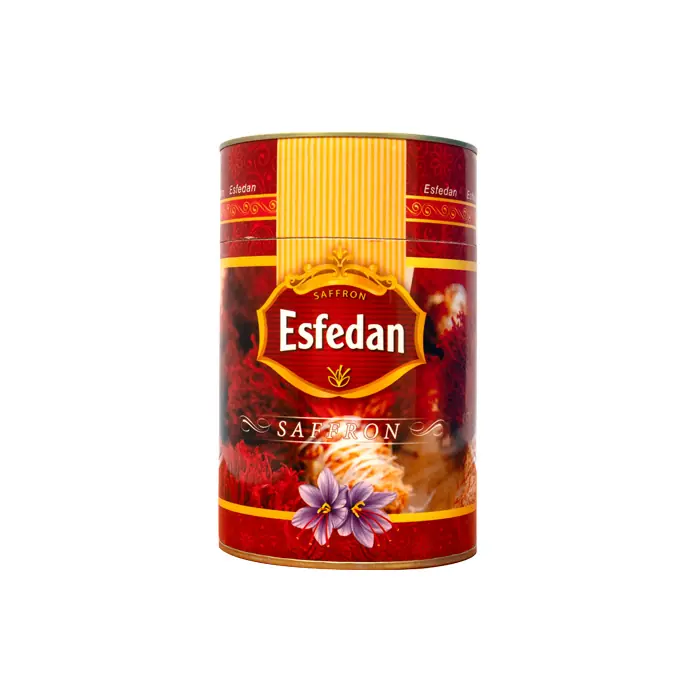
The current technical references illustrate this clearly: one Bunch format is 28 g and identified as Grade 4, while another is 1000 g and identified as Grade 3.
The saffron price for Bunch can differ according to grade, Crocin level, ratio of red stigma to style, filament condition, harvest quality, packaging, freshness, and market conditions.
This means price should not be compared only by weight. A Grade 3 and a Grade 4 Bunch product, for example, may have different analytical profiles and intended uses.
Businesses comparing broader commercial pricing can consult the Saffron Wholesale Price information separately rather than treating this category page as a wholesale price list.
The products displayed in this category represent different ways to buy saffron while retaining the recognizable Bunch filament structure.
Smaller packages may suit retail or culinary use, while larger formats can serve professional or repackaging requirements. The purpose of the category is to make these Bunch options easy to compare without mixing them with unrelated saffron cuts.
Information specifically focused on larger commercial formats is available in the Bulk & Wholesale Saffron section.
Esfedan’s involvement with saffron dates back to 1964. For Bunch saffron, the emphasis is on preserving the recognizable stigma-and-style structure while controlling measurable parameters such as moisture, coloring strength, aroma, flavor, purity, and microbiological condition.
Esfedan manages saffron handling, separation, drying, grading, laboratory control, and packaging through specialized processing infrastructure. Its quality and food-safety systems include ISO 22000, FSSC 22000, HACCP, Halal, Iran National Standard, and the Iranian FDA Health Code. The supplied Bunch materials also reference 21 national awards as an Exemplary and Leading Saffron Exporter.
More information about Esfedan as an iranian saffron company can be provided through the relevant internal company page