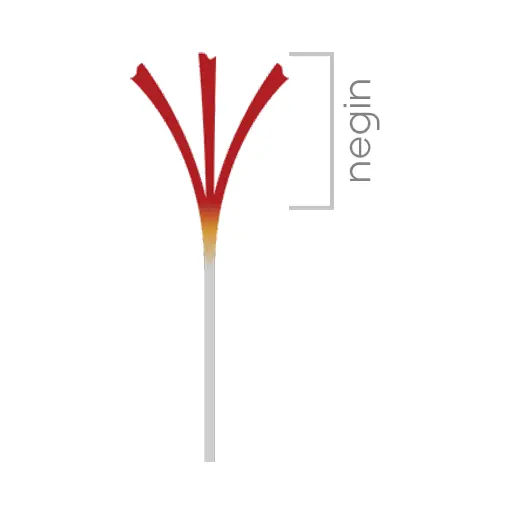
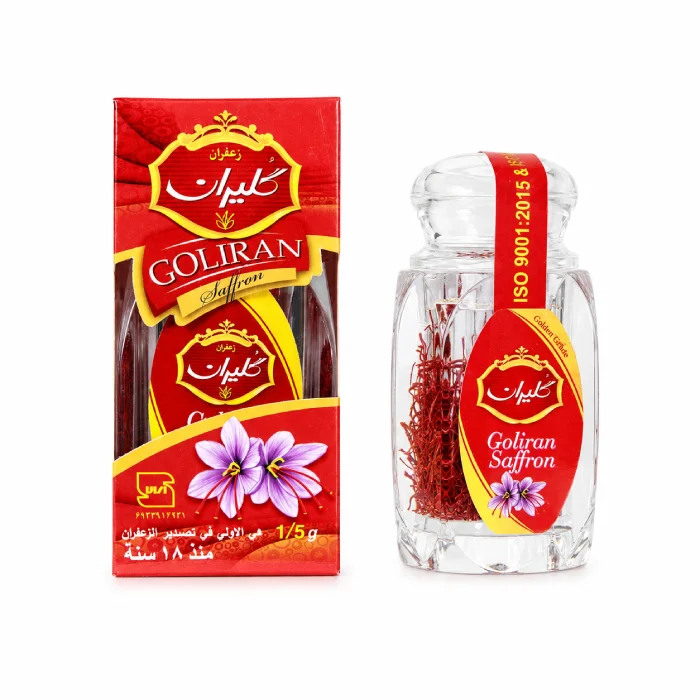
Goliran Grade 1 Negin Saffron is made from the red stigmas of Crocus sativus. Negin is distinguished by its relatively long, developed filaments and the absence of an attached yellow or white style. This gives the product a clean, all-red appearance while preserving the visible structure of the saffron.
The accompanying laboratory data records a Crocin value of 240–275, with a minimum specified value of 230. Safranal is measured at 28–50, Picrocrocin at 65–100 and moisture and volatile matter at 7.13%. These measurements provide product-specific information about its colouring performance, aroma, flavour and moisture level. The test sheet also records no detected artificial colorants.
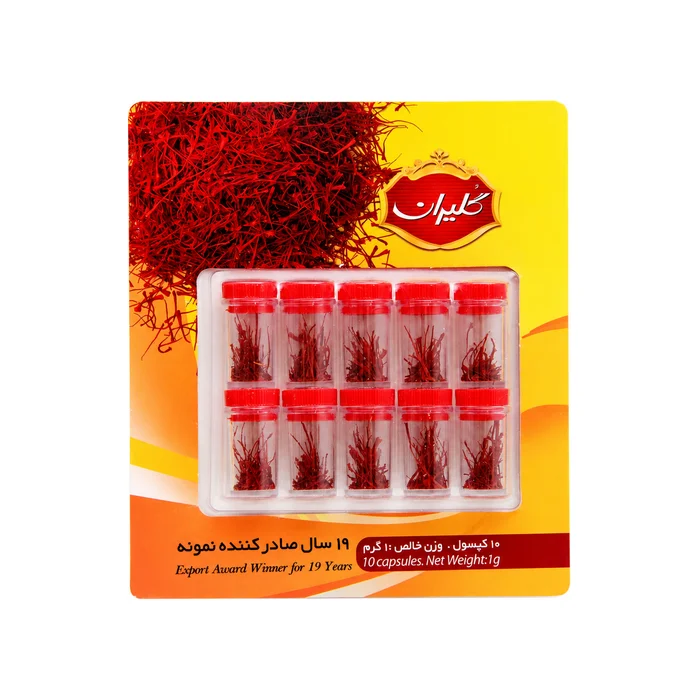
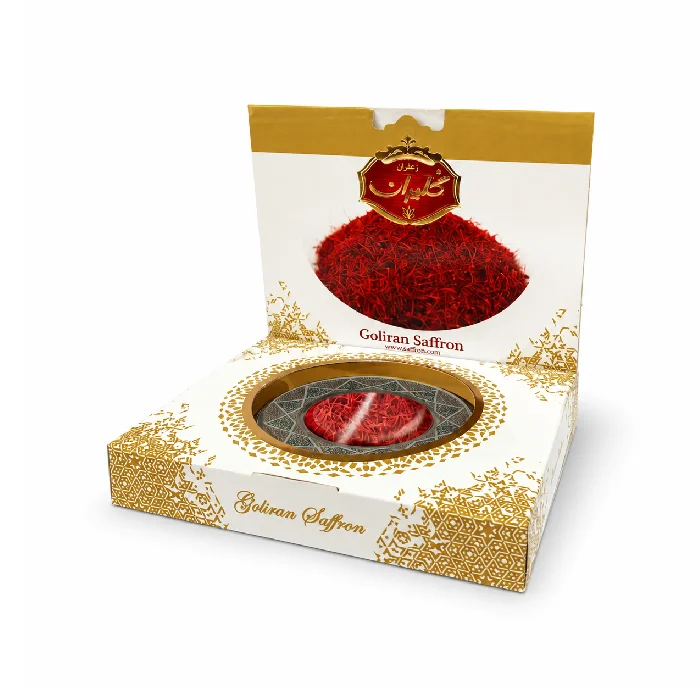
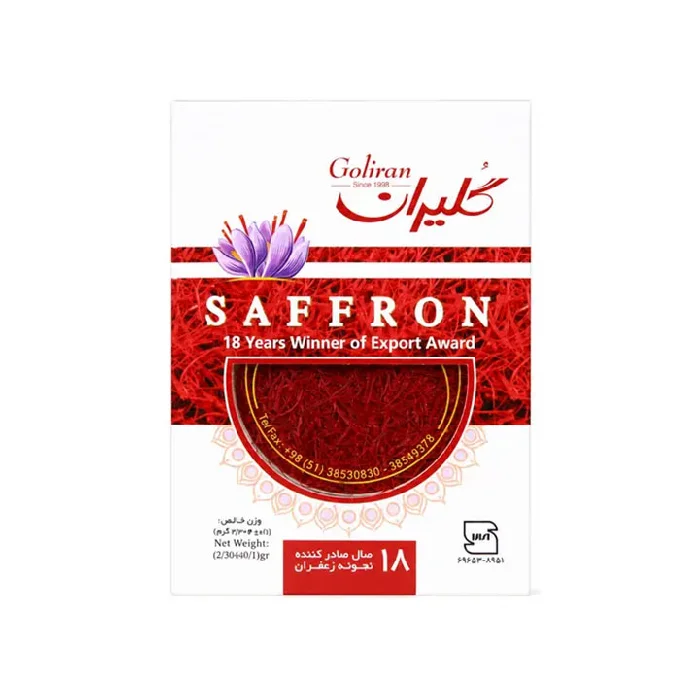
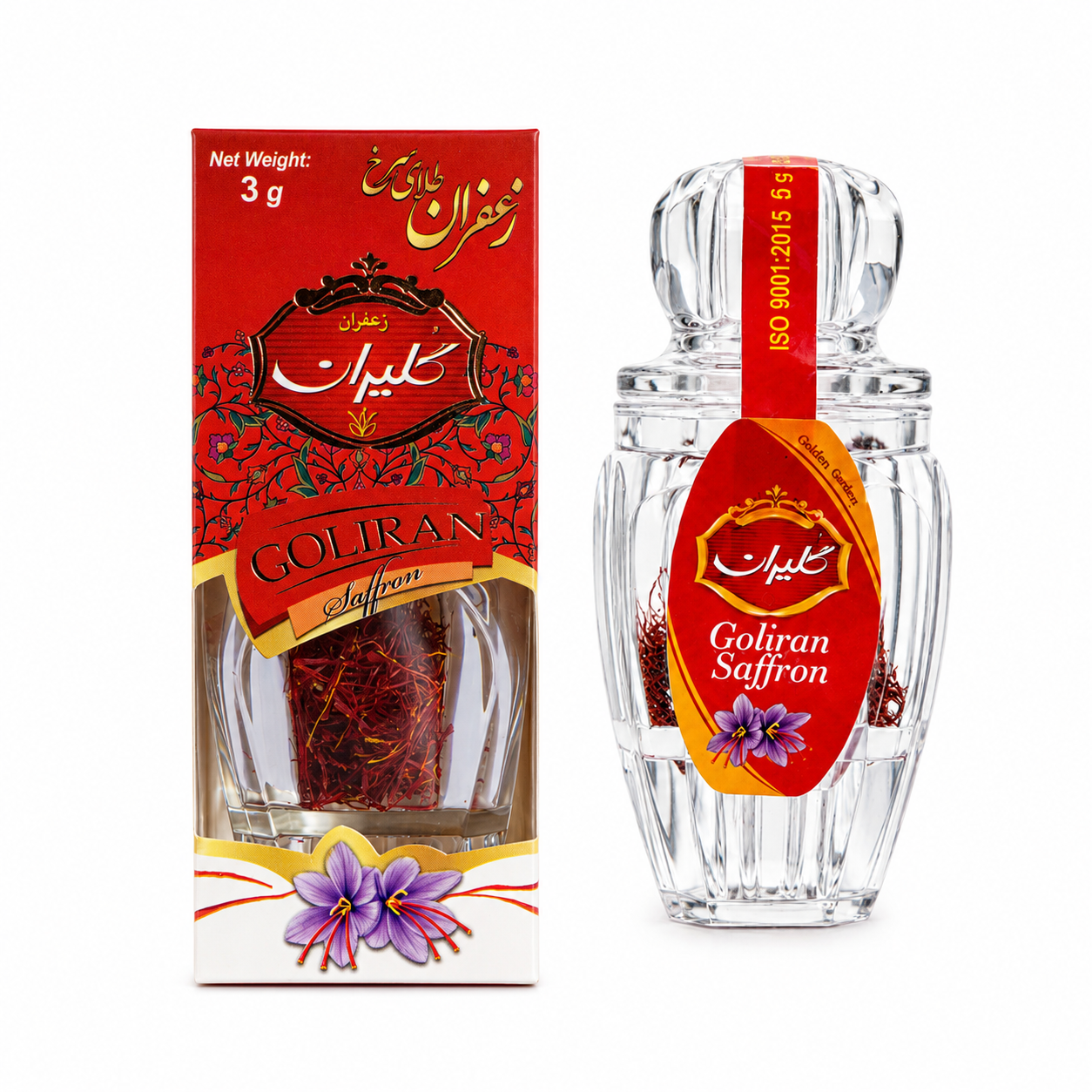
The saffron is presented in a food-grade polystyrene capsule-style container inside a cardboard envelope. The transparent containers keep the filaments visible, while the outer envelope holds the retail unit together. This format is suitable for culinary use and for presentation in retail saffron ranges.
This product is supplied as saffron threads rather than powder, allowing the filaments to be inspected before they are crushed or infused. Other products with the same thread classification can be compared in the Negin saffron category.
Readers comparing Negin with Sargol, Super Negin, Pushal and Bunch can consult our guide to the Types of Iranian Saffron. Further information about Iran and other cultivation regions is available in the saffron producing countries guide.
Packaging Specifications
1 g Packaging
| Packaging Level |
Quantity |
Dimensions |
Net Weight |
Gross Weight |
| Individual unit |
PS capsule container in a cardboard envelope |
13.5 × 15 cm |
1 g |
Approx. 40 g |
| Master box |
40 units |
33 × 25 × 16 cm |
40 g |
Approx. 1.9 kg |
| Export carton |
10 master boxes / 400 units |
33 × 80 × 51 cm |
400 g |
Approx. 19.5 kg |
Directions for Use
Gently crush the required amount of saffron using a mortar or the back of a spoon. Crushing the filaments before infusion helps them release their colour, aroma and flavour more evenly.
Add the crushed saffron to water at approximately 70–80°C and allow it to infuse for 15–20 minutes. Add the prepared infusion to rice dishes, soups, sauces, teas, desserts, cakes or other recipes.
Allergen Information
The product datasheet states that the product may contain allergens. Anyone with a known history of allergic reactions should seek appropriate medical advice before use.
Storage and Shelf Life
Store in a cool, dry place away from direct light. Keep the saffron in its original packaging until use and protect it from moisture, heat and strong odours.
Best before 24 months from the packaging date when stored under the recommended conditions.
Nutrition Facts
The following nutritional values are stated per approximately 1 g of saffron.
Main Nutrients
| Nutrient |
Amount |
| Energy |
3.1 kcal |
| Total Carbohydrate |
0.653 g |
| Dietary Fibre |
0.039 g |
| Protein |
0.1143 g |
| Total Fat |
0.0585 g |
| Saturated Fat |
0.01586 g |
| Monounsaturated Fat |
0.00429 g |
| Polyunsaturated Fat |
0.02067 g |
| Sugar |
0 g |
Vitamins
| Nutrient |
Amount |
| Vitamin A |
5.3 IU |
| Vitamin B1 |
0.00115 mg |
| Vitamin B2 |
0.00267 mg |
| Niacin / Vitamin B3 |
0.0146 mg |
| Vitamin C |
0.808 mg |
Minerals
| Nutrient |
Amount |
| Calcium |
1.11 mg |
| Iron |
0.111 mg |
| Magnesium |
2.64 mg |
| Phosphorus |
2.52 mg |
| Potassium |
17.24 mg |
| Sodium |
1.48 mg |
| Zinc |
0.0109 mg |





Reviews
There are no reviews yet.