

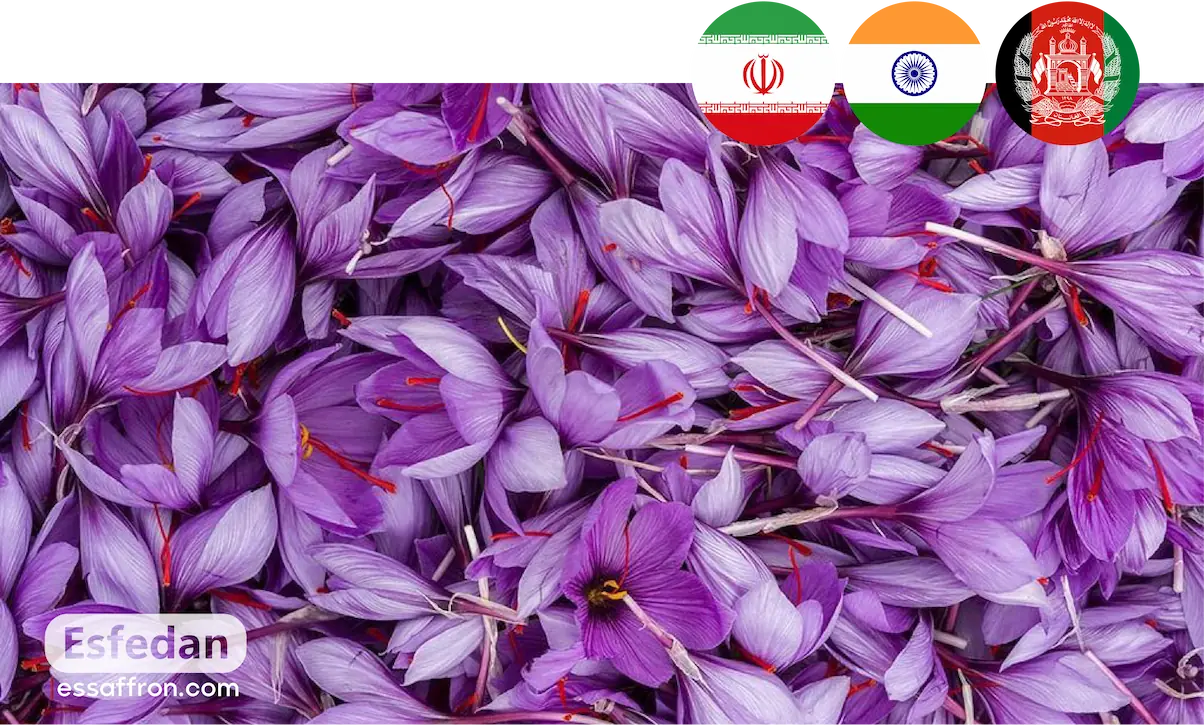
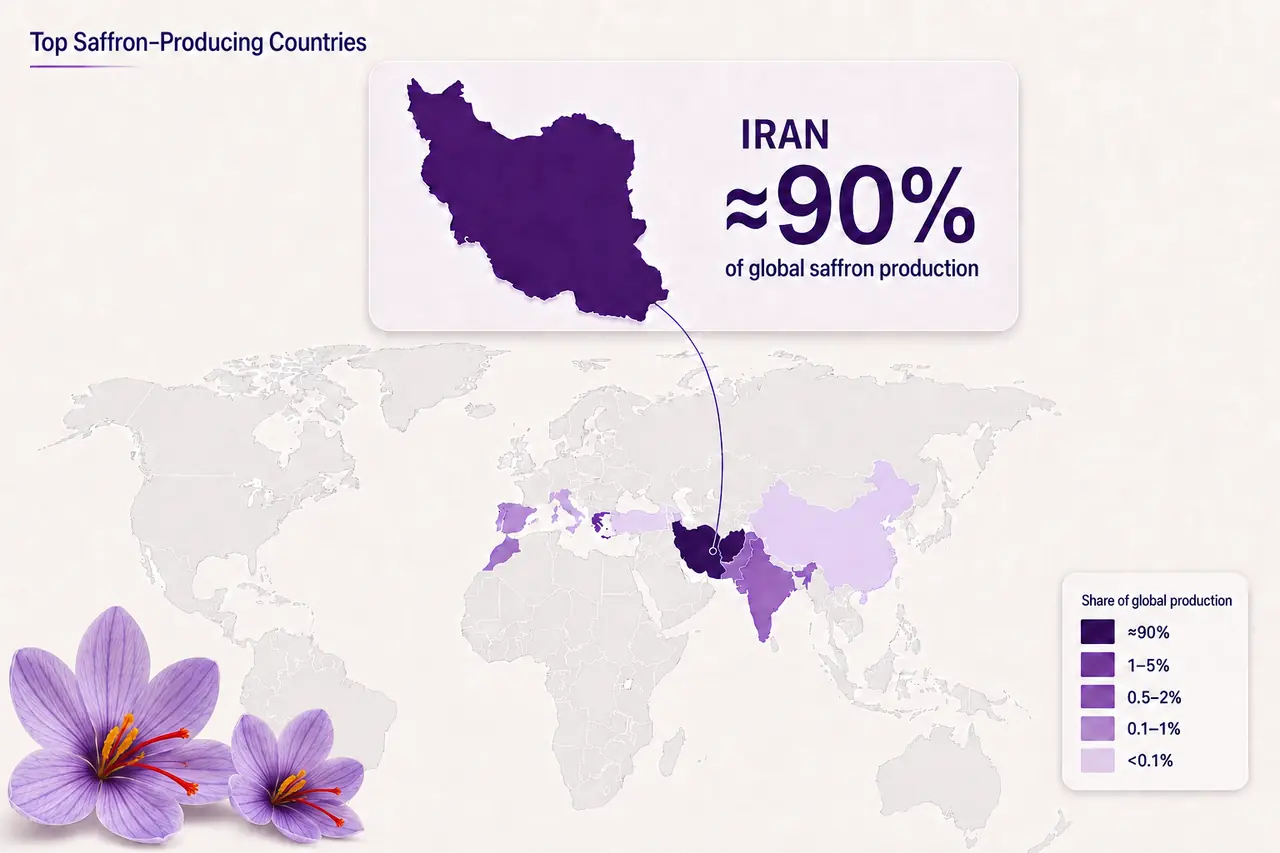
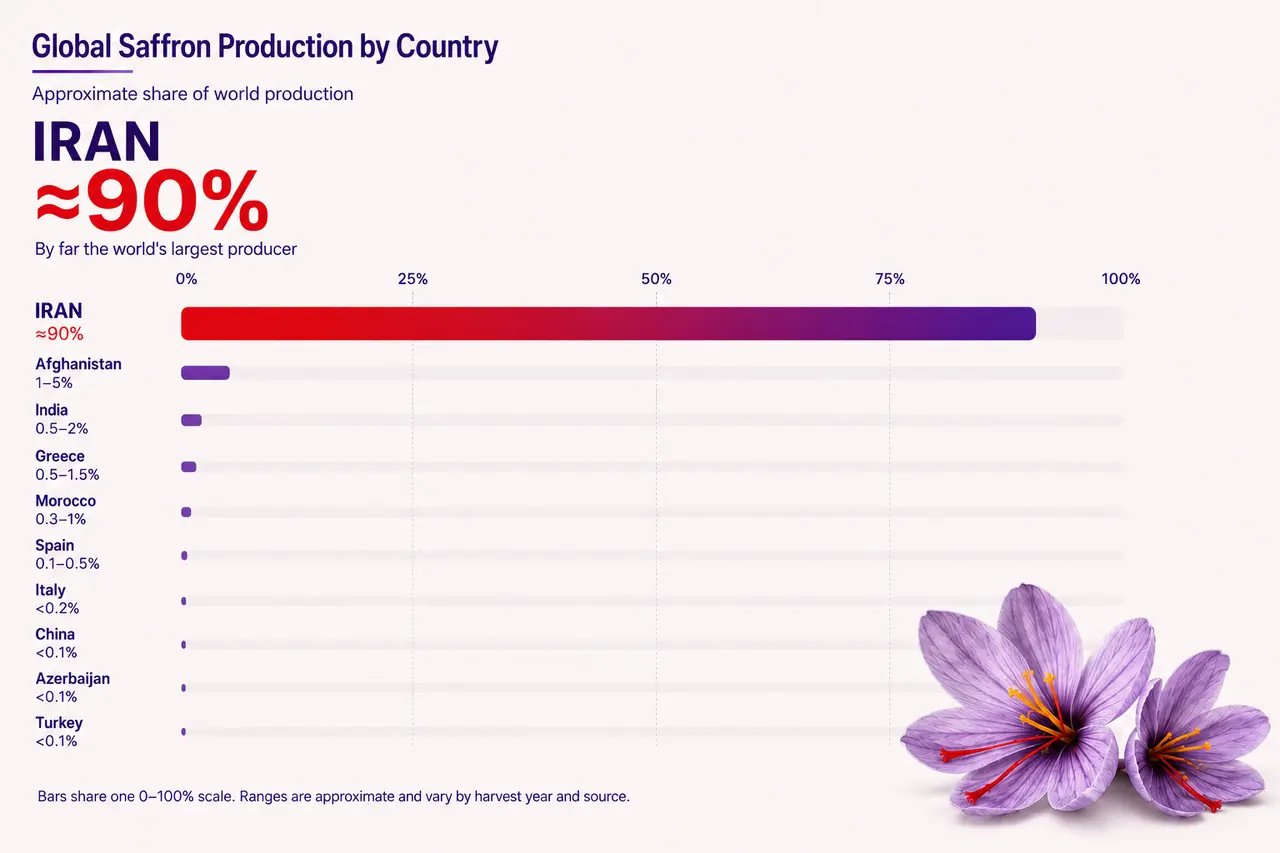
Iran is the world’s largest saffron producer, contributing approximately 90% of global production. Most Iranian saffron is grown in the Khorasan provinces, especially around Qaenat, Torbat-e Heydarieh, Gonabad, Ferdows, Birjand and Zaveh. India, Afghanistan, Greece, Morocco and Spain are other established saffron-producing countries, while Italy, Azerbaijan, China and Turkey produce smaller quantities.
Production figures outside Iran vary by harvest year and source. The order of the smaller producers should therefore be treated as indicative rather than as a permanent global ranking.
Where Is Saffron Grown?
Saffron is grown mainly in Iran, which contributes approximately 90% of the world’s production. Iran’s largest saffron-growing area is the Khorasan region, especially Qaenat, Torbat-e Heydarieh, Gonabad, Ferdows, Birjand and Zaveh. The scale of cultivation in these areas makes Iran the main source of saffron for the global market.
Outside Iran, saffron is grown in Kashmir and Pampore in India, Herat in Afghanistan, Kozani in Greece, Taliouine and Taznakht in Morocco, Castilla-La Mancha in Spain, and selected areas of Italy, Azerbaijan, China and Turkey. Production in all of these countries is much smaller than Iran’s and can change considerably from one harvest year to another.
Where Does Saffron Come From?
Most saffron sold internationally comes from Iran, particularly the Razavi Khorasan, South Khorasan and North Khorasan provinces. Qaenat, Torbat-e Heydarieh, Gonabad, Ferdows, Birjand and Zaveh are among the best-known sources of Iranian saffron. According to the Food and Agriculture Organization of the United Nations, Iran contributes approximately 90% of global saffron production.
More information: Types of Iranian Saffron
Saffron Production by Country
The table compares ten recognised saffron-producing countries and their main cultivation regions. Only Iran has a consistently documented dominant global share; the relative positions of the other countries can change with weather, acreage and annual harvests.
| Country | Main saffron-growing region | Relative production scale |
|---|---|---|
| Iran | Khorasan provinces, including Qaenat, Torbat-e Heydarieh, Gonabad and Zaveh | Approximately 90% of global production |
| India | Kashmir, especially Pampore | Established producer; much smaller than Iran |
| Afghanistan | Herat Province | Growing producer with variable annual output |
| Greece | Kozani | Established but geographically concentrated production |
| Morocco | Taliouine and Taznakht | Important North African producer |
| Spain | Castilla-La Mancha | Limited domestic production with a strong market identity |
| Italy | Abruzzo, Sardinia and Tuscany | Small regional production |
| Azerbaijan | Absheron Peninsula | Historic but limited production |
| China | Zhejiang and selected cultivation areas | Emerging small-scale production |
| Turkey | Safranbolu | Small traditional production |
The comparison shows the size of the gap between Iran and every other saffron-producing country. Countries outside Iran collectively account for only a small part of global production.
Top 10 Saffron Producing Countries
1. Iran: The World’s Largest Saffron Producer
Iran is the world’s leading saffron producer and supplies approximately 90% of global production, according to FAO. The country’s main cultivation area is Greater Khorasan in northeastern Iran. Its dry summers, cold winters and long-established farming knowledge support saffron production on a scale that no other country currently matches.
Razavi Khorasan and South Khorasan contain many of Iran’s best-known saffron centres. Qaenat is closely associated with South Khorasan saffron, while Torbat-e Heydarieh, Gonabad and Zaveh are major production areas in Razavi Khorasan. Saffron is also cultivated in Ferdows, Birjand and parts of other Iranian provinces.
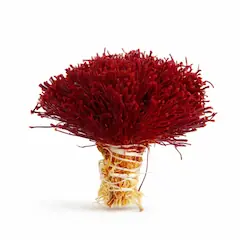
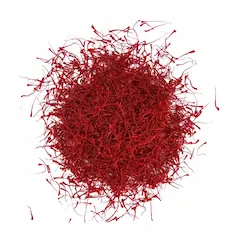
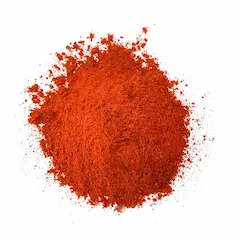
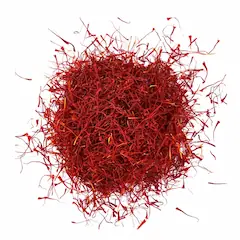
Iran’s production scale supports a broad commercial range, including Super Negin, Negin, Sargol, Pushal and Bunch saffron, as well as saffron powder and extract. Commercial grade names describe the physical form of the threads; they do not replace testing for purity, moisture and colouring strength.
Esfedan Saffron has more than 60 years of experience processing and supplying Iranian saffron in thread, powder and instant-extract formats. Importers and food manufacturers can review Esfedan’s bulk and wholesale saffron options or learn more about working with an experienced Iranian saffron supplier.
2. India: Saffron from Kashmir and Pampore
India’s saffron production is concentrated in Kashmir, particularly in and around Pampore. Kashmiri saffron has a strong regional identity and limited annual availability. India is an important saffron producer and consumer, but its production volume is only a small fraction of Iran’s.
3. Afghanistan: Saffron from Herat
Most Afghan saffron is grown in Herat Province, close to northeastern Iran. Afghanistan has expanded saffron cultivation as a high-value rural crop, but reported output varies considerably by year. Herat is therefore an important regional source rather than a competitor to Iran in total production volume.
4. Greece: Krokos Kozanis
Greek saffron is grown mainly around Kozani in northern Greece and is commonly known as Krokos Kozanis. Production is limited and concentrated, but the region has a recognised identity in European food markets and an established cooperative production system.
5. Morocco: Saffron from Taliouine
Morocco’s main saffron-growing areas are Taliouine and Taznakht near the Atlas Mountains. Moroccan production is small compared with Iran, but saffron has significant economic value for growers and rural cooperatives in these regions.
6. Spain: Saffron from Castilla-La Mancha
Spain has a long history of saffron cultivation, especially in Castilla-La Mancha. Genuine Spanish-grown saffron remains a recognised regional product, although Spain’s agricultural production is much smaller than Iran’s. Saffron packed or marketed by a Spanish company is not necessarily grown in Spain, so buyers should check the declared country of origin and batch documentation.
7. Italy: Small Regional Production
Italy produces small quantities of saffron in Abruzzo, Sardinia and Tuscany. Zafferano dell’Aquila is one of the country’s best-known regional products. Italian saffron is usually produced by smaller farms for local and speciality markets rather than for high-volume export.
8. Azerbaijan: Historic Cultivation in Absheron
Azerbaijan has a long history of saffron cultivation, particularly on the Absheron Peninsula. Present production is limited, so Azerbaijani saffron is better described as a regional speciality than as a major source of global supply.
9. China: Emerging Saffron Cultivation
China cultivates saffron in selected areas, including parts of Zhejiang. Current production remains small compared with the established producing countries, and much of the market is connected to domestic demand.
10. Turkey: Saffron from Safranbolu
Turkey’s saffron tradition is closely connected with Safranbolu. Cultivation continues on a small scale, and Turkish saffron is supplied mainly through local and speciality markets rather than the international bulk market.
Which Country Produces the Best Saffron?
No country produces the best saffron in every harvest and every batch. Iran, India, Afghanistan, Greece, Morocco, Spain and Italy can all produce high-quality saffron. Quality depends on purity, moisture, crocin, picrocrocin and safranal levels, as well as harvesting, drying, storage and batch consistency. Buyers comparing the best saffron in the world should evaluate the specific batch and its laboratory results instead of relying only on the country name.
How Can Buyers Verify Where Saffron Was Grown?
The country where saffron is packed is not always the country where it was cultivated. Buyers should check the declared country of origin, batch number, traceability documents, product specification and laboratory report. For wholesale orders, the supplier should also be able to state the saffron’s form, commercial grade, crop information, net weight, processing method and packaging conditions.
Frequently Asked Questions
Which country produces the most saffron?
Iran produces the most saffron in the world. FAO reported in 2024 that Iran contributes approximately 90% of global saffron production.
What are the top 5 saffron producing countries?
Iran, India, Afghanistan, Greece and Morocco are commonly included among the other important saffron-producing countries, although their order changes by crop year and data source. Spain is also frequently included because of its established cultivation history and market presence.
What Is Saffron’s Country of Origin?
Iran is the main country of origin for saffron. Most Iranian saffron is grown in the Khorasan provinces, particularly around Qaenat, Torbat-e Heydarieh, Gonabad and Zaveh. Saffron is also cultivated in India, Afghanistan, Greece, Morocco, Spain, Italy, Azerbaijan, China and Turkey.
Is saffron grown outside Iran?
Yes. Saffron is also grown in India, Afghanistan, Greece, Morocco, Spain, Italy, Azerbaijan, China, Turkey and several other countries. Their combined production is much smaller than Iran’s.
Conclusion
Iran is the main source of the world’s saffron and produces approximately 90% of global output. The centre of Iranian saffron cultivation is the Khorasan region, including Qaenat, Torbat-e Heydarieh, Gonabad, Zaveh, Ferdows and Birjand. India, Afghanistan, Greece, Morocco and Spain are the next most established saffron-producing countries, while Italy, Azerbaijan, China and Turkey produce smaller quantities.
For buyers, country reputation is only the starting point. Country-of-origin documents, traceability, laboratory results and processing controls provide stronger evidence of a saffron batch’s identity and quality. Retail customers can compare available products before they buy saffron, while importers and food businesses should request batch-level documentation for wholesale supply.
Sources
Aissa R. et al.: Phytochemistry, quality control and medicinal uses of saffron, 2023