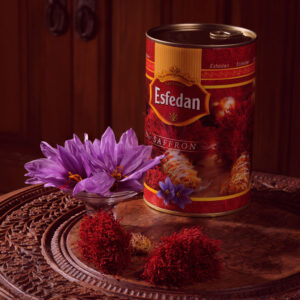


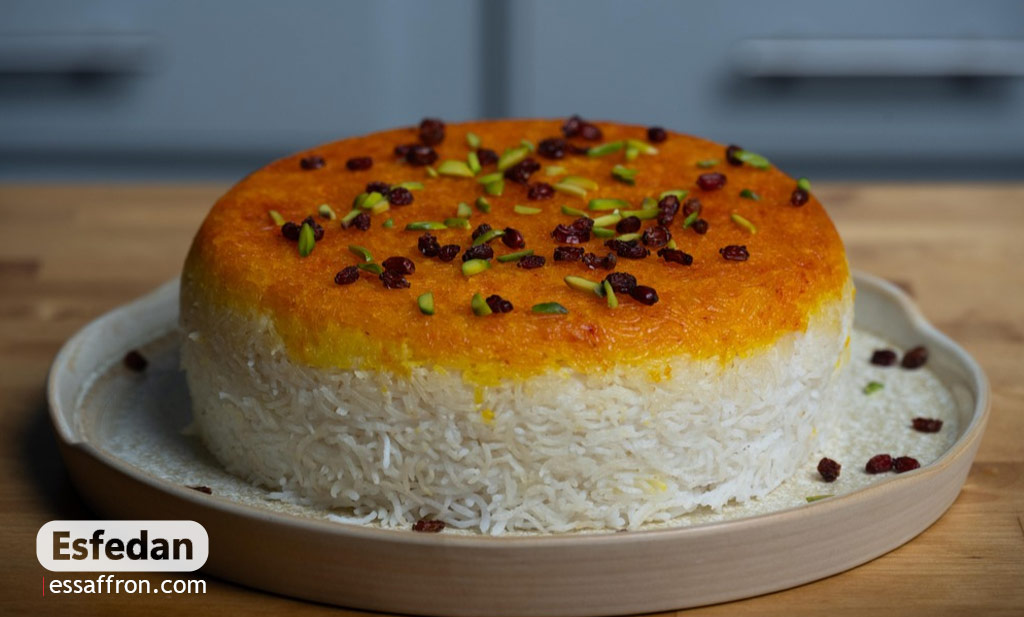
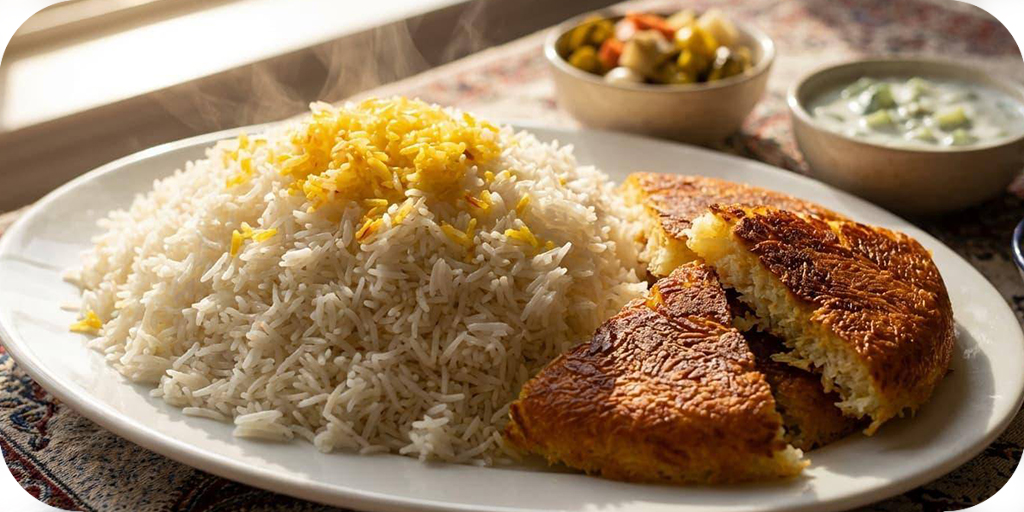
To make Iranian saffron rice, briefly boil soaked basmati rice in salted water, drain it, and steam it over low heat until tender. Mix a portion of the cooked rice with bloomed saffron, then spoon it over the white rice before serving. This method produces separate, fluffy grains with a fragrant golden topping.
Ingredients and Timing
This recipe serves 4 people as a generous side dish. Allow approximately 75–90 minutes, including 30 minutes of soaking. The exact cooking time depends on your rice, so check the grains before draining.
| Ingredient | Amount |
|---|---|
| White basmati rice | 2 US cups, approximately 370 g |
| Saffron threads, measured before grinding | ¼ teaspoon |
| Hot water for blooming saffron | 3 tablespoons |
| Neutral cooking oil | 2 tablespoons |
| Butter or additional oil | 1 tablespoon |
| Fine salt for the boiling water | 1 tablespoon, adjusted to taste |
| Water for boiling | Approximately 8 US cups |
| Water for steaming | 2 tablespoons |
You will also need water for rinsing and soaking, a large saucepan, a fine-mesh colander, and a heavy-bottomed nonstick pot with a close-fitting lid. A small mortar and pestle makes grinding the saffron easier.
The boiling water is drained away. This is not an absorption recipe, so you do not need to wait for those 8 cups of water to disappear.
Which Rice Should You Use?
White basmati is a practical choice for long, separate grains. Iranian rice also works well, but soaking and boiling times vary between varieties. Follow any instructions supplied with the rice and check its texture during cooking. Brown rice and precooked rice need different timings, so they are not direct substitutes in this recipe. Plain water is used instead of stock to keep the flavour suitable for serving alongside Persian stews, grilled chicken, or kebabs.
How to Make Iranian Saffron Rice
Prepare the saffron while the rice soaks, then keep it aside until serving. Adding the infusion to cooked rice preserves it rather than losing it in the water during draining.
1. Rinse and Soak the Rice
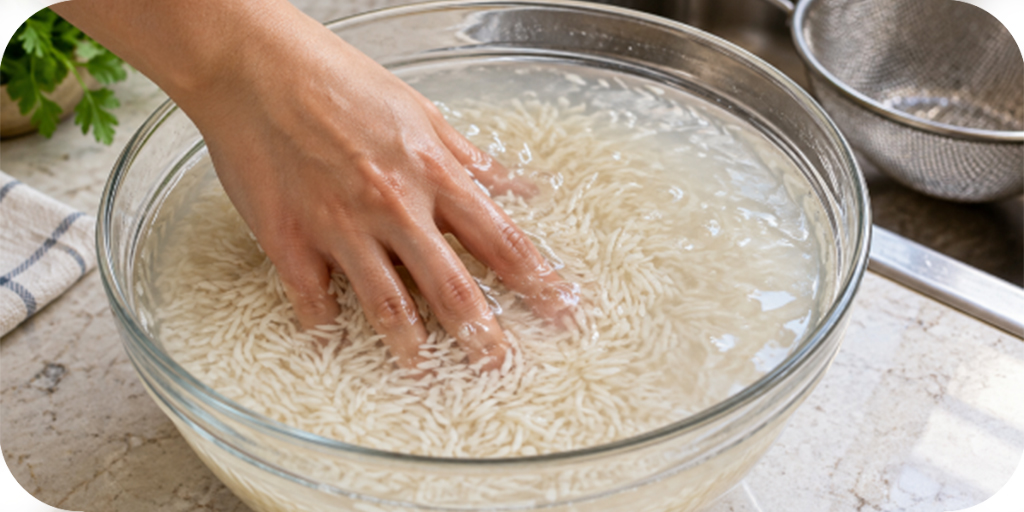
Wash the rice gently in several changes of cool water until the water becomes noticeably clearer. Cover with fresh water and soak for 30 minutes, then drain. Avoid rubbing the soaked grains together or stirring them vigorously. They are more delicate after soaking and can break with rough handling.
2. Bloom the Saffron
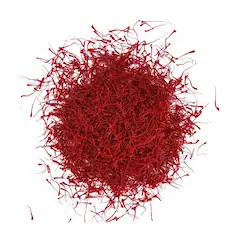
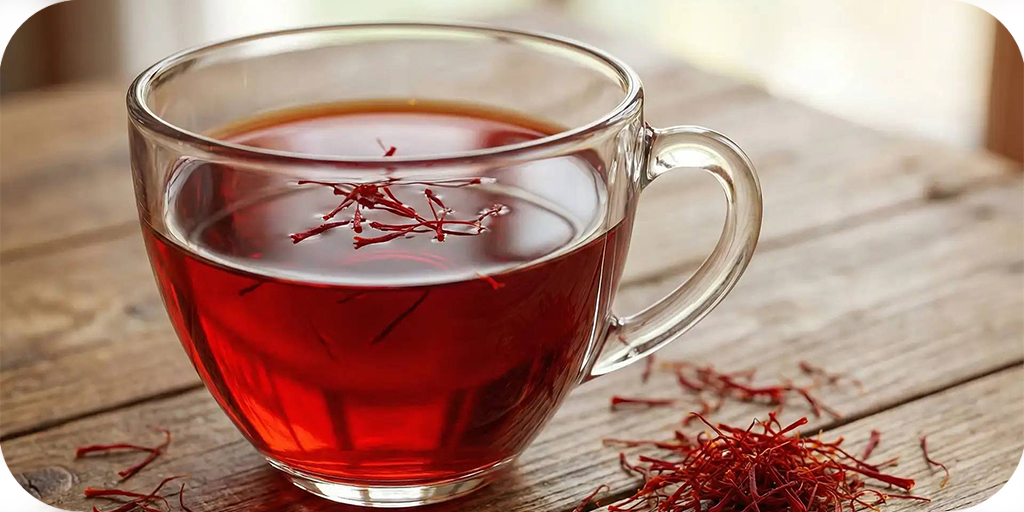
Grind the saffron threads, place them in a small heatproof bowl, and add 3 tablespoons of hot water. Cover and leave for 10–15 minutes while you prepare the rice.
Use the entire infusion when making the topping, including the fine saffron particles. If you enjoy saffron in drinks as well as food, our Saffron Tea guide offers another way to prepare it.
3. Parboil and Drain
Bring approximately 8 cups of water to a rolling boil in a large saucepan and add the salt. Add the drained rice, stir gently once, and start checking the grains after 4 minutes. Many white basmati varieties will be ready to drain after roughly 5–8 minutes.The outside of a grain should feel tender while its centre remains slightly firm, without a hard, crunchy core. Drain promptly. If the rice tastes too salty, rinse it briefly with warm water.
Texture is the deciding factor here. Clovegarden’s Persian rice instructions similarly use a slightly firm centre as the checkpoint for draining rather than prescribing one boiling time for every variety.
4. Steam over Low Heat
Warm the oil gently in the heavy-bottomed pot, then carefully add the 2 tablespoons of steaming water. Spoon in the drained rice, loosely mounding it toward the centre. Make a few channels through the rice with a spoon handle so steam can circulate, without scraping the base. Cover and cook over medium heat for approximately 3–5 minutes, until steam develops. Reduce the heat to low and steam for around 25–35 minutes, until the grains are tender. Keep the lid closed during most of this time. Turn off the heat and leave the covered pot to rest for 5 minutes.

5. Prepare the Saffron Topping
Transfer about 1 cup of the cooked rice to a bowl. Add the saffron infusion and butter, then fold gently until the grains are golden. Spoon the remaining white rice onto a serving platter and arrange the saffron rice across the top. Use a broad spoon and a light lifting motion to keep the grains intact.
Is Tahdig Necessary?
Tahdig is optional. Iranian saffron rice can be served as loose rice on a platter without turning out the pot. The golden saffron topping and the browned crust at the bottom are separate parts of the dish.
For a simple rice tahdig, spread the first thin layer of drained rice evenly over the oiled base of the nonstick pot before adding the rest. Leave that layer undisturbed during steaming. Serve any golden crust separately. If the bottom has scorched, lift out the upper rice without scraping the burnt layer into it.
Common Problems and How to Fix Them
Check the rice before draining and control the heat during steaming. These two steps matter more to the final texture than adding extra oil or saffron.
| Problem | Likely cause | What to do |
|---|---|---|
| Soft or broken grains | Boiling too long or handling roughly | Check earlier next time and fold gently when serving |
| Rice still firm after steaming | Draining too early or losing steam | Sprinkle over 1–2 tablespoons of hot water, cover tightly, and steam for another 5–10 minutes |
| Burnt smell | Excessive heat beneath the pot | Remove from heat and lift out the upper rice without disturbing the base |
| Wet saffron topping | Too much infusion for that portion of rice | Fold more cooked rice into the topping |
What to Serve with Iranian Saffron Rice
Serve saffron rice with grilled chicken, kebabs, Persian stews, or roasted vegetables. A cucumber-and-tomato salad provides a fresh accompaniment without competing with the saffron aroma.
Saffron’s role in this dish is flavour, fragrance, and colour. For a separate look at its researched effects on health, read our guide to saffron benefits.
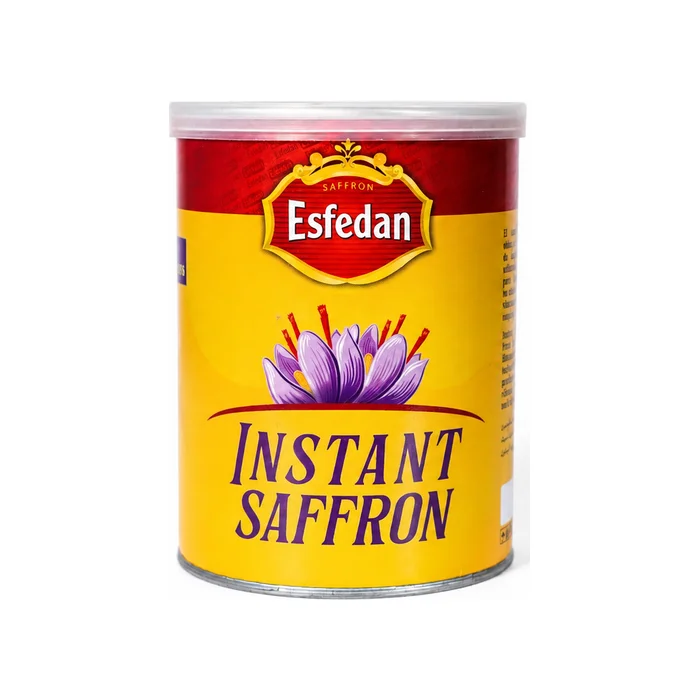
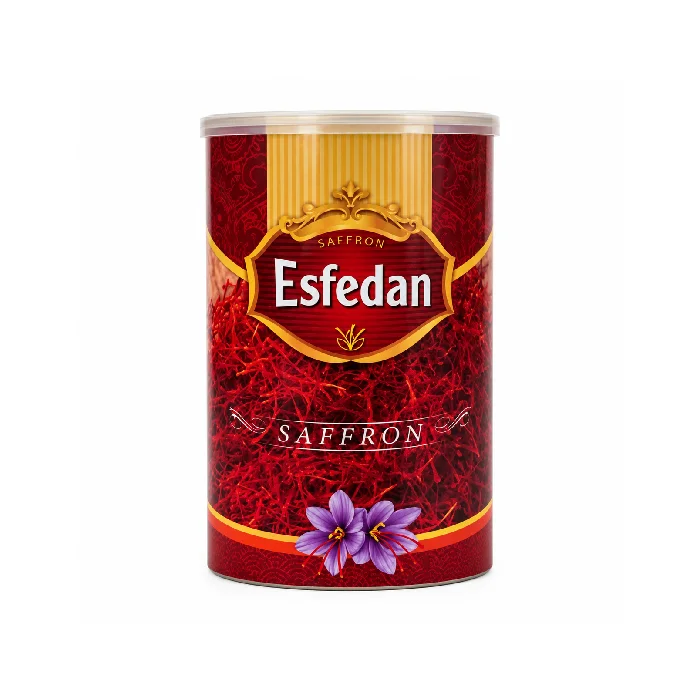
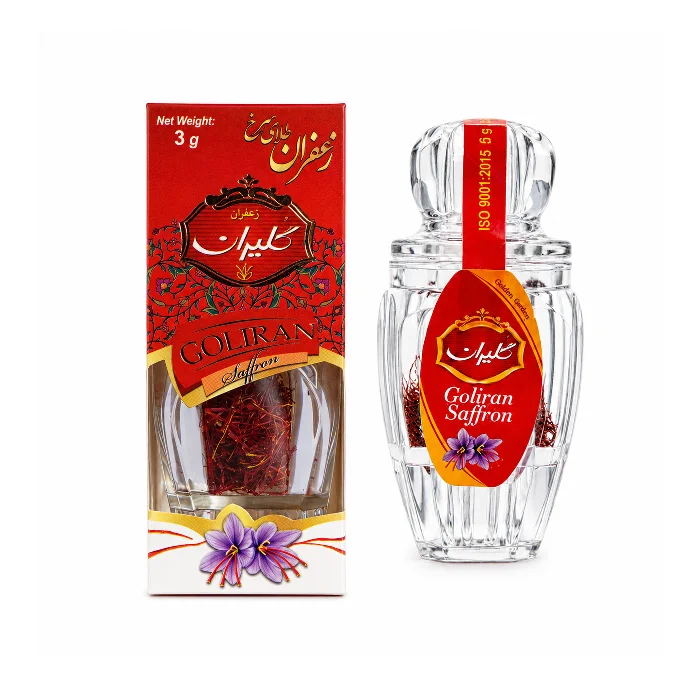
For your next dish, explore the Esfedan recipe collection. If you are choosing saffron for your kitchen, consult our Saffron Price guide before comparing pack sizes.
How to Store and Reheat Leftovers
Cool leftover rice quickly, ideally within one hour, refrigerate it, and use it within 24 hours. Divide it into small, shallow portions rather than leaving it to cool in the cooking pot. To reheat, add a small splash of water, cover, and warm gently. Check that the centre is hot as well as the edges.
Frequently Asked Questions
These answers address common substitutions and serving choices for this recipe.
Can I Use Ground Saffron Instead of Threads?
Yes. Use pure ground saffron and bloom it in water. A quarter teaspoon of powder is not equivalent to a quarter teaspoon of loose threads, so follow the product’s dosing guidance.
Can I Replace Saffron with Turmeric?
Turmeric gives rice a yellow colour, but it does not reproduce saffron’s aroma or flavour. The result will taste different.
Should All the Rice Be Yellow?
No. A golden saffron topping over white rice is one serving option. You can gently fold the topping through the remaining rice if you prefer a more even distribution.
Is Saffron Rice the Same as Tahchin?
No. Tahchin is a separate dish commonly prepared with yogurt, eggs, and saffron. This recipe contains neither yogurt nor eggs.
Can I Make This Recipe Vegan?
Yes. Replace the butter with 1 tablespoon of oil and serve the rice with vegetables or a plant-based stew.
References
- Avey, Tori. Saffron Rice. Tori Avey, updated 2022. Saffron-infusion technique and comparison with absorption-style rice.
- Clovegarden. Persian Rice — Chelo ba Tahdig. Publication date not stated. Parboiling checkpoint and drained-rice method.
- Food Standards Agency. Home food fact checker — Rice. GOV.UK, updated 2026. Cooling, refrigeration, and reheating guidance.